What is Your Astrology Chart?

The astrology chart, or birth chart, shows the location of the planets in their constellations at the moment you were born. Astrologers often examine patterns or’shapes’ that occur in the chart, which can reveal important aspects about your life What is Your Astrology Chart.
.
Generally, there are 12 areas in the chart, called houses, which represent different areas of your life. Different astrologers use different systems to divide the chart into houses.
Signs-What is Your Astrology Chart
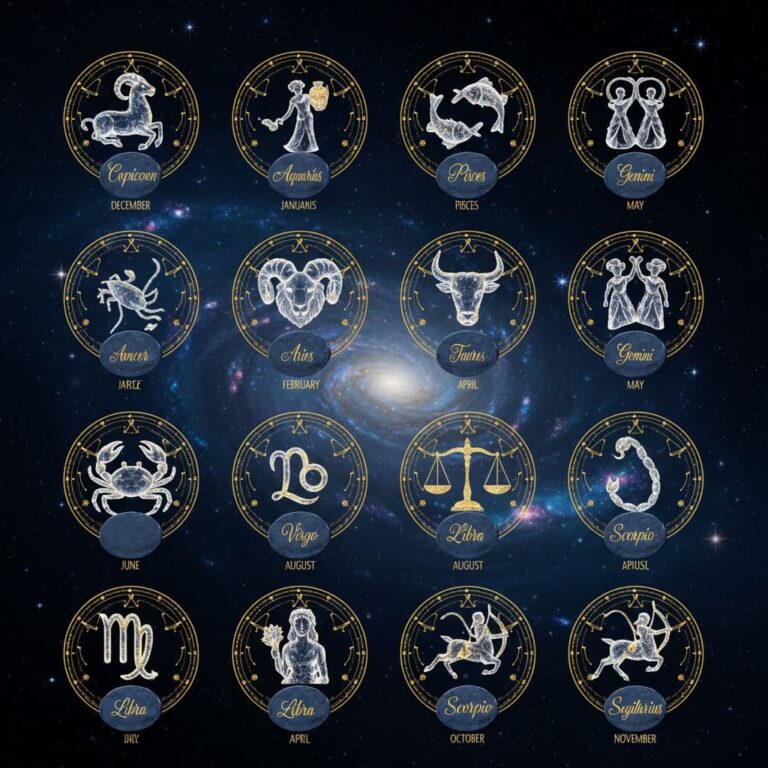
In Western astrology, each of the 12 zodiac signs are 30-degree sectors that the sun moves through while crossing the ecliptic, beginning with Aries at the vernal equinox and ending with Pisces at the autumnal equinox. They are named after the constellations the sun passes through during these periods — and the names were later influenced by Hellenistic culture. Signs are also characterized by their qualities: masculine, feminine, and cardinal, fixed or mutable.
In a natal chart, each of these qualities is represented by a house. The 1st, 4th, 7th and 10th houses are considered angular or powerful houses, meaning that their planets exert strong influences. These areas of the chart are often ruled by feminine, water and cardinal planets, which give a person strength, courage and enthusiasm to tackle life’s challenges.
The astrology charts we generate in the CHANI app and website include all of these pieces of the puzzle, as well as your Ascendant, Midheaven, Descendant, Vertex and Part of Fortune. The chart wheel and info sheet display all of the major planets as well as the Black Moon Lilith, North Node and Chiron.
When a single sign dominates a natal chart, it is called a Signature Sign. Weighting by element and quality determines the dominant sign, with Fire Signs weighing more heavily than any other element. A person with the majority of their planets in a sign that’s a Cardinal or Fixed Sign may be very driven and goal-oriented, but also impatient and impulsive.
Jyotish astrology recognizes five elements — fire, earth (land), air, water and ether — and the corresponding signs. In this system, Mars rules fire, Mercury rules earth, Saturn rules air, Jupiter rules water and Venus rules ether.
It’s a bit overwhelming to get a handle on all the parts of your chart at once. We recommend starting with just a few keys — your Sun, Moon and rising sign, as well as the planet that rules your rising sign. Choose one of these and spend some time exploring how you embody its energies in your life.
Houses
As the zodiac signs bring the sky down to Earth, the houses take this concept one step further. Each house is a way to divide the ecliptic plane into twelve equal parts and represents different areas of life, such as friendships (11th House) or your home (fourth House).
The 1st House, ruled by Mercury, colors how you show up in the world. It reveals your style, personality, and temperament. It also reflects the many chapters, journeys, projects and rebirths that you move through in a lifetime. The first house colors your ability to express yourself and give form to all of your magic.
The second house is a place of personal wealth and self-esteem. It governs money and resources, including family inheritance and business partners. The second house also shows how you nurture your needs and how you express yourself through money. The seventh house is about committed partnerships and emotional happiness, with a focus on the people that are closest to you in your life (like your friends). The eighth house rules sexuality, death, and karma, and shows how our relationships transform us over time.
Finally, the tenth house is about your public image and career aspirations, with a focus on career goals. The tenth house rules your social status and professional achievements, and is ruled by Capricorn energy.
Each house is ruled by a specific planet or group of planets, and some astrologers use what’s called the “partition” system to determine which house is ruled by which planet or set of planets. This method takes into account the angular, succedent, and cadent points of each house, which are calculated from its ascendant, descendant, and equinox.
However, not all astrologers use this technique. The majority of astrologers use the conjunction, opposition and sesquiquadrate techniques to determine each house’s rulership. The cusps of each house are also classified as being angular, succedent or cadent, which adds to the complexity of understanding each individual chart. In addition, some astrologers consider the Part of Fortune (an Arabic part) and other mathematically calculated points and angles to determine each house’s rulership.
Planets
Astrology is a study of the movements of astral bodies through the 12 signs and houses of the zodiac during an individual’s birth. The movement of these planets and stars can be seen to offer potential strengths, areas for growth and a sense of life’s possible direction.
Enter your date of birth below to generate a personalized astrology chart.
A birth chart reveals the precise position of the planets and which constellation they were occupying at the moment you entered this world. The chart shows which sign each of these significant celestial entities was in, what element they were associated with and what house they were in. These divisions of the ecliptic are known as your house system and there are many different methods for calculating them. Depending on the method used, the houses can be slightly different from one astrologer to the next. Generally speaking, however, the major planets are shown in their own sign and each of these is assigned to one of the twelve star signs. These are referred to as your ruling planets. They are seen to define the traits of each star sign and to be important in determining your personality, your values and your journey through life.
Aspects
Astrology is a system of relationships between planets. To determine these connections, the astrologer takes note of not only the Sun and Moon but also all the inner planets (Mercury, Venus, Mars, Jupiter and Mercury) as well as Uranus, Neptune and Pluto and even some minor planets and asteroids. These planets are all positioned in the houses and in relation to each other through what are called aspects. Often these aspects form significant patterns or ‘shapes’ in the chart and can greatly influence the personality of the native.
An aspect is the angular relationship between two planets or points in the natal chart. When a hard or negative aspect such as a conjunction, opposition, square or semi-square forms between the planets it can create challenges to be overcome. However, a trine or sextile between the same two planets can be a positive energy that can enhance talents and potential.
Aspects are calculated by the astrologer using a set of tables known as an ephemeris, which show the position of the Sun, Moon and planets at a given date and time in sidereal (astronomical) time and location. The astrologer then notes the location of the ascendant, midheaven and descendant as well as the positions of the houses and the major planetary nodes.
Aspects are also categorized as hard, soft or neutral, depending on the nature of the aspect and the planets involved. The more exact an aspect is the more powerful it is but even the most exact aspects operate within an orb, the size of which varies according to the importance of the planets involved. In general, fast-moving planets like Jupiter and Mars tend to energize, while slower planets such as Saturn and Neptune inhibit. Other factors to consider include whether a planet is direct or retrograde and its strength, whether it is in a trine, sextile or square and the fact that it is either in a fiery or watery sign. In addition, the astrologer will take note of whether a planet is void of any major aspects or in a sextile or trine with the Nodes of the Moon or Sun (North and South). The North Node represents karma and the reincarnation process while the South Node denotes karmic debt and retribution What is Your Astrology Chart.
.



+ There are no comments
Add yours